
We build real capacity by pairing hands-on construction with structured apprenticeship, safety-first site culture, and quality sign-offs. Our work proves one thing: local teams can deliver consistent results when training is tied to real sites, real standards, and real supervision.
Built projects. Trained crews. Measurable outcomes.

During the construction of facilities for Hands for an African Child, Terry Meinzer and other trade masters from the United States (US) trained over 50 apprentices through practical, on-site learning. The build supported a mission focused on caring for orphaned children through family-based homes and community development.
What happened
What we delivered
-
On-site apprenticeship instruction embedded in daily work
-
Safety habits reinforced through supervision and correction
-
Quality control through staged inspections and sign-offs
-
Crew leadership development for reliable, repeatable delivery

Proof of long-term value
Graduates from this training, including Gerald Nambale (Civita Skillers Co-Founder), have gone on to lead construction teams in Wau and Juba, delivering facilities and managing crews with the same discipline and standards learned on the original build.
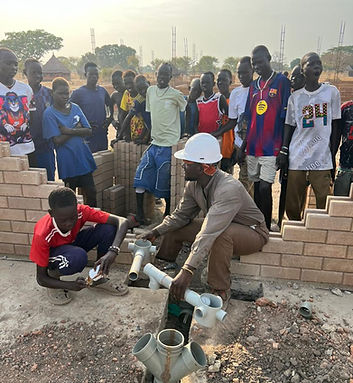
How Apprentices Were Trained
Modern tools and jobsite productivity
Apprentices learned more than tool use. They learned tool selection, setup, safe operation, maintenance, and accuracy through supervised practice. Training included common jobsite tools for drilling, cutting, fastening, measurement, and finishing.
How we confirmed skill
-
Practical skills checks such as straight cuts to line, drill depth consistency, and level and plumb verification
-
Immediate correction and repeat practice until performance was consistent
-
Daily tool care routines including cleaning, storage, and basic troubleshooting
Safety-first site culture
Safety was trained as a daily operating standard. Apprentices followed clear routines that reduced risk and improved discipline across the site.
What apprentices practiced
-
Daily toolbox talks focused on hazards, controls, and task readiness
-
Consistent personal protective equipment (PPE) use
-
Housekeeping to prevent trips, falls, and tool damage
-
Safe lifting and carrying, ladder use, and safe material handling
-
Incident reporting habits and stop-work responsibility when conditions were unsafe
Quality control and workmanship standards
Quality was built into the workflow using clear standards, checkpoints, and sign-offs. Apprentices learned how to prevent defects, not just fix them later.
Core trade skills developed on live work
Training focused on real trade outputs that affect safety, speed, and quality.
How quality control worked
-
Work broken into stages such as preparation, set-out, installation, finishing, and inspection
-
Checklists used before moving to the next stage
-
Measurable checks for level, plumb, square, spacing, alignment, and finish consistency
-
Corrective work completed early to avoid hidden defects and late rework
-
Lean Six Sigma methods for reliable delivery
-
Lean Six Sigma was introduced as a practical way to reduce waste, prevent rework, and improve predictability
What apprentices applied
-
5S practices to organize tools, reduce time loss, and improve site cleanliness
-
Simple defect tracking for issues like uneven finishes, incorrect measurements, and poor adhesion
-
Root cause thinking to fix the process, not blame people
-
A jobsite-ready improvement cycle: define the standard, measure results, analyze causes, improve the method, and control with checklists
Skills commonly developed
Leadership development for graduates
-
Tiling: layout, spacing, cutting, alignment, and clean joint finishing
-
Painting: surface preparation, primer and coating control, clean edges, and final presentation
-
Carpentry basics: set-out, fixing, frames, doors, trims, and alignment checks
-
Masonry and plaster basics: correct mixing, consistent application, curing awareness, and smooth finishes
Apprentices were trained to grow into site leaders. Graduates learned how to plan daily work, enforce safety, uphold quality standards, and coach others
Leadership outcomes
-
Daily task planning and coordination
-
Early inspections, documentation, and corrective action
-
Coaching methods based on demonstration, repetition, and feedback
Skills commonly developed

Outcomes We Track
-
Apprentices trained on live projects, not simulations
-
Practical competence in teamwork, measurement discipline, and finishing quality
-
Safety compliance through routine and supervision
-
Right-first-time quality through checklists, staged inspections, and sign-offs
-
Graduates stepping into foreman and crew-lead roles across active sites
Gallery


Describe your image